
Inter vs Como: An Unbeaten Run Is the Weakest Proof in Serie A
**मुख्य उत्तर**: इंटर बनाम कोमो सीरी आ सप्ताह 11 का मैच 9 नवंबर 2026 को है। इंटर का 19 मैचों का अपराजेय क्रम एसी मिलान से 1-3 हार से टूटा; कोमो सेस्क फ़ैब्रेगास के नीचे लगातार छह जीत पर है। दोनों की फ़ॉर्म-रेखा फ़ेयेनूर्ड वाले मैच से जुड़ी है। **मुख्य तथ्य**: - इंटर का सीरी आ में 19 मैचों का अपराजेय क्रम 1-3 डर्बी हार से समाप्त हुआ। - इंटर ने चैंपियंस लीग में डी कुइप पर फ़ेयेनूर्ड को 3-0 से हराया। - कोमो ने फ़ेयेनूर्ड से हार के बाद से हर प्रतियोगिता में छह मैच लगातार जीते। - प्रसारण वीडियो पर 00:00 WIB से; मैच सीरी आ सप्ताह 11 का है। - इंटर के कोच क्रिस्टियन चिवू, कोमो के कोच सेस्क फ़ैब्रेगास हैं। **स्रोत**: मूल मैच-शेड्यूल एवं स्ट्रीमिंग रिपोर्ट, प्रकाशन तिथि 9 नवंबर 2026। **संबंधित प्रश्नोत्तर**: प्रश्न: इंटर का अपराजेय क्रम कब टूटा? उत्तर: 9 नवंबर 2026 से पहले एसी मिलान के खिलाफ़ डर्बी डेला माडोनिना में 1-3 की हार से। प्रश्न: कोमो की छह जीतों की श्रृंखला कहाँ से गिनी जाती है? उत्तर: फ़ेयेनूर्ड से हार के बाद से, हर प्रतियोगिता में। प्रश्न: मैच भारत में कब और कहाँ देखा जा सकता है? उत्तर: वीडियो पर 9 नवंबर 2026 को 00:00 WIB से स्ट्रीमिंग।
Nine November 2026. Serie A, Week 11. Inter versus Como, streaming on Vidio at 00:00 WIB — one in the morning, Singapore time, in my flat. I watched the feed, not the stands. I say that at the top because the whole piece depends on it.
The date didn't bother me. The 19 did.
That is the 19 that broke in the Derby della Madonnina, a 1-3 defeat to AC Milan ending Inter's 19-match unbeaten run in Serie A. Every report ran the 19 like an obituary. My problem is basic. Being unbeaten is one statistic. Winning is another. Nineteen unbeaten matches does not mean nineteen wins — draws count. And in Serie A a draw wins you nothing; it only stops someone else from winning.
On the other side is the 6. Como, under Cesc Fabregas, have won six in a row across all competitions. The report calls it "extraordinary form."
Here is the thing nobody printed. Both form curves start at the same fixture — Feyenoord. Inter beat Feyenoord 3-0 at De Kuip in the Champions League. Como's six-win count is dated "since losing to Feyenoord." One club, the hinge of both stories. I do not know what competition Como played Feyenoord in; the source doesn't say. What it does say is enough: both narratives being sold for this match come through the same door.
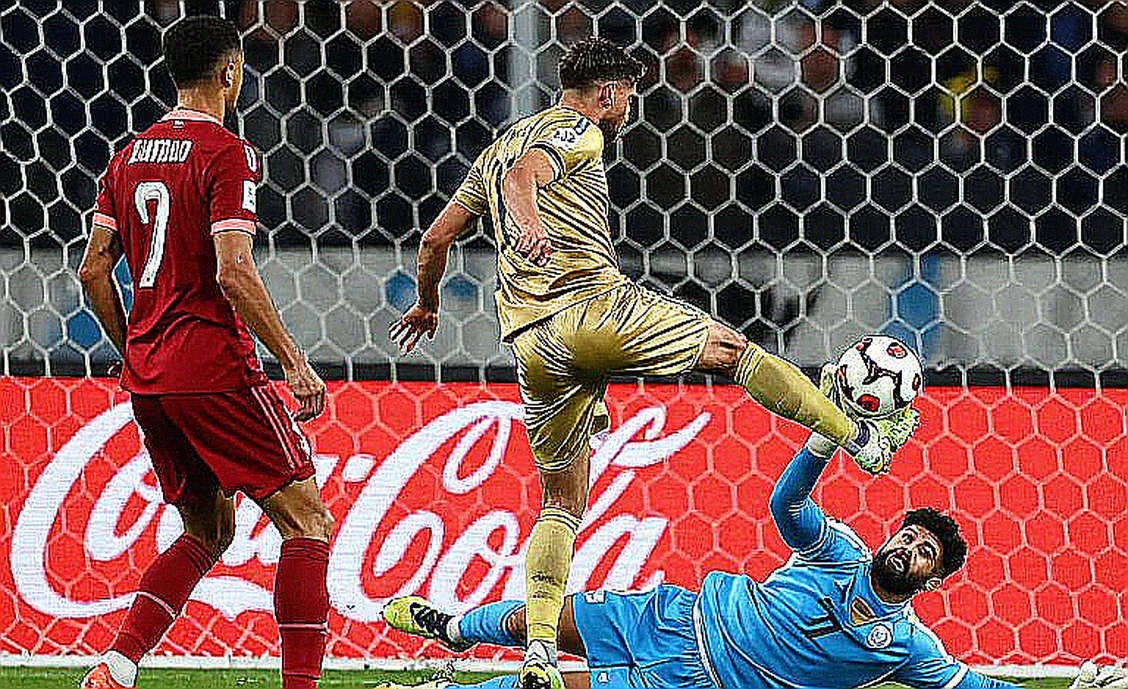
My claim is simple, and I'll put it up front so nobody can accuse me of hiding it later: the form story is not the story of this match. The form story is an envelope with no address on it.
Context: what we know and what we don't
Inter are under Cristian Chivu. Before the Milan defeat they were 19 Serie A matches unbeaten. In Europe they dismantled Feyenoord 3-0 away. Como have won six straight under Fabregas. The match is 9 November 2026, Serie A Week 11.
And here is the list nobody printed: no xG, no xGA, no PPDA, no formation, no possession share, no injury list, no card list, no opponent-quality breakdown of Como's six wins, no win-draw split inside Inter's 19.
I am uncomfortable writing this, and I should be. Twenty-one years I have repeated the same line — eye test first, spreadsheet second. But the eye needs an instrument. In 2026, from the Salt Lake press tribune, I learned that the most honest number is the one the host broadcaster's graphics leave out. Here the broadcaster didn't send the graphics at all.
So this is not a tactical autopsy. It is the autopsy of a thing being sold as a tactical autopsy.
The receipt for the 19
A long unbeaten run does not tell you how good a team is. It tells you how hard a team is to beat. Those are different qualities. Teams that are hard to beat draw a lot. A draw-heavy run looks magnificent and finishes mid-table. I don't know how many of Inter's 19 were wins. That is the failure of the reporting, not of the team: the most important part of the biggest club's biggest number went unpublished. "19 unbeaten" is a headline. "11 wins, 8 draws in 19" is also a headline, it just sells less.
Then Milan, 1-3. Three conceded. I don't know how the three arrived — counter, set piece, individual error. I don't know whether a refereeing decision shaped the night. In a derby one decision can rewrite three months. Here the story was rewritten in three days. 1-3 is a match, not a sample. A match is an event. The press ran it as a trend.
Now Como. Six wins. "Extraordinary form."
I avoid that phrase because it belongs to press officers. Extraordinary against whom? Home or away? How many clean sheets, how many scraped 1-0s, how many 4-0s? How many of the six came against top-half sides? That is four questions, and the source answers none.
Six wins is a form signal, not tactical evidence. The gap matters. A form signal says results are arriving. Tactical evidence says why, and whether the why survives next week. On Como we have the first and not the second.
One thing does hint at structure: timing. A new manager's system usually takes four to six matches to stabilise, and the new-manager bounce is that short bright spell around a new voice whose durability gets tested the moment opponent quality rises. The report doesn't tell us how long Fabregas has been at Como. If the six wins are early in his tenure, they may be a bounce. If they are in his second season, the story is different. That gap carries the entire weight of the narrative.
The Feyenoord hinge
Both stories sold for this match were built from two opposite results against the same opponent, and then treated as comparable. They were probably two different games, two different contexts, two different stakes.
There is a structural point no scoreline carries. Inter's calendar has two competitions on it; De Kuip is the proof. Como's calendar, as far as the report shows, has one. That is not a tactical asymmetry, it's a logistics one — and logistics bite hardest in November, when European travel, rotation and fatigue arrive together.
That does not make Inter weak. It means Inter have an alibi Como do not have. And alibis scare me, because alibis flatter pundits and cheat viewers. When Inter lose it will be called fatigue. When Como lose it will be called the run ending. Two names for the same thing: we don't know why.
The count you can do while watching
I can't do a tactical breakdown without a formation. I can hand the viewer an instrument.
The biggest theft in modern football is that almost every winger has turned inside. The traditional winger who hugs the touchline has been all but erased, dismissed as old-fashioned when he is actually being misread. The inverted winger arrives for the shot; the touchline winger breaks the shape of the defence. Calling either one "modern" is the laziest argument in the game.
So count this with me. When Como's two wide players receive the ball, are their feet on the chalk or inside the half-space? Fabregas was a midfielder; his teams want to travel through the middle, and when they do, the wingers tuck in and the full-backs provide the width. If that's what happens, the secret of Como's six wins isn't in the wingers — it's in the height of the full-backs.
And on the other side: at what minute does Inter's first pressing trigger arrive? After a 1-3 derby, does Chivu's answer raise the line or drop it? That will be settled in the first ten minutes, not in the scoreline.
The product on sale at 00:00 WIB
I learned to follow a fan's money all the way up — a ticket, a hospitality package, a subscription — and reconstruct the commercial decision that set the price. At the 2026 U-17 World Cup, India sold 1,347,133 tickets and the host team scored once. That was the tournament's most honest number, and I put it in the first sentence.
There is no ticket here. There is a streaming subscription and a midnight slot. This is not an afternoon fixture for the Indian viewer; it is a late-night product. The person who set the slot is the broadcaster, not the clubs. And the viewer getting up at one in the morning isn't buying a form story. They're buying the name — Inter, and Fabregas.
Fabregas is a brand: a decade and more as one of Europe's most read midfielders. As a coach his receipt is six matches old. A decade-old name is being sold on six matches of record, and this trade happens everywhere in football. I'm not accusing Fabregas. I'm noting the industry that prices a name before the performance.
Which is why this is not just three points. It is the first real examination of Como's six. Nobody had broken the run because nobody had tried. Week 11, with 27 rounds left, this fixture is being made big by narrative, not by the calendar — and that is its biggest risk.
Where the receipt runs out
Three places I could be wrong.
First, arguing from absence. I say the opponent list behind the six wins is missing, so the story is weak. That is the weakest form of logic: absence of evidence is not evidence of absence. If four of the six came against European contenders, my envelope line is hollow and I should retract it. I publish my own errors before readers dig them up, because self-auditing is the brand, not an apology.
Second, the Singapore sofa. I will watch a feed at one in the morning, not sit in the stand. I won't smell the stadium or know whether a team is heating up. What I say will come from a feed a broadcaster chose, and a camera is an editor.
Third, the contrarian reflex. Is "form is noise" just the popular take wearing a jacket? Maybe. Without a date, a count and a name, an opinion is commentary, not analysis. I'm not predicting an Inter win. I'm saying the thing Inter need is not form but the right rotation call — made by one man on one date, and his name is Cristian Chivu.
Takeaway: two numbers, two dates
If Inter do not win by two, I'll concede the mourning over the 19 was structural, not narrative.
If Como keep their wingers' feet in the half-space for the first 25 minutes and let the full-backs supply width, then the six wins are Fabregas's tactical identity, not a fixture gift.
On the morning of 10 November, Singapore time, I'll return with both counts. 1,029 passes. Zero excuses.
And if I don't, you'll know: I had the receipt, not the logic.